Rome, Italy – March 31, 2026 (Last Updated: April 1, 2026)
Europe’s Strategic Break Signals New Phase in Iran War
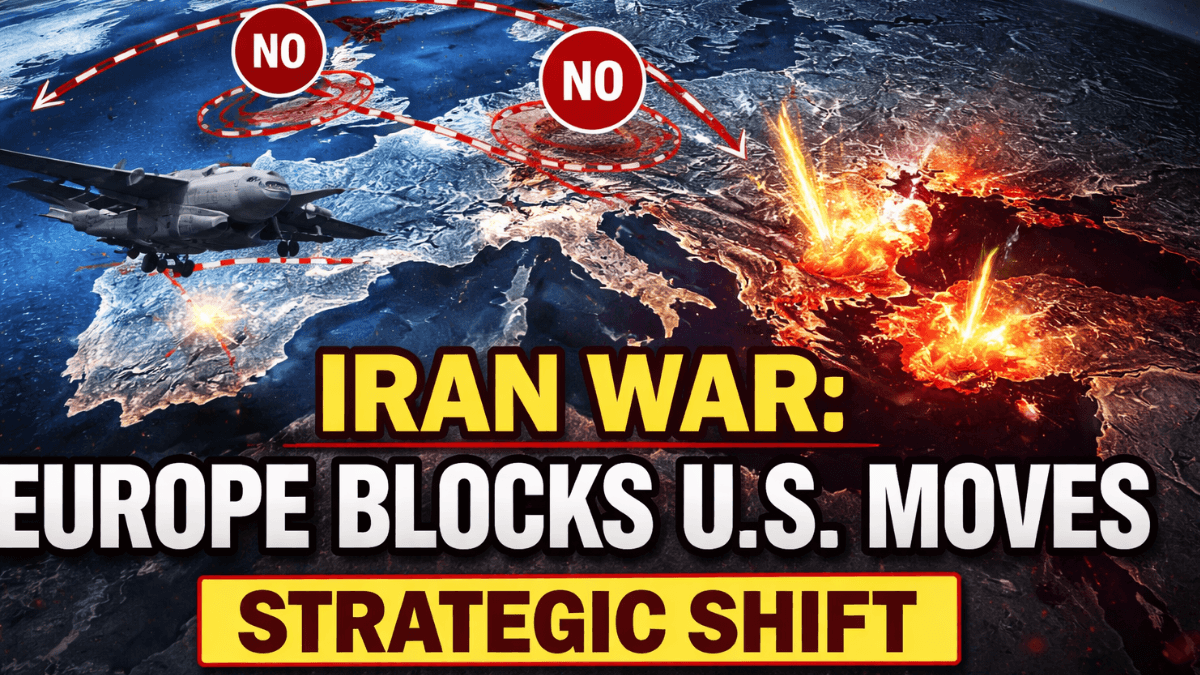
The iran war has entered a more complex and dangerous phase as Italy and Spain move to restrict U.S. military operations, signaling a growing fracture within Western alliances. Italy’s refusal to allow American combat aircraft to use its Sigonella base is not just a procedural decision; it reflects a deeper strategic shift with global consequences. Coming just a day after Spain shut its airspace to U.S. planes targeting Iran, the move highlights rising European resistance to escalation. Together, these actions suggest the conflict is no longer confined to the Middle East but is reshaping geopolitical alignments across continents.
The iran war developments continue to evolve as European resistance to U.S. military operations shows no sign of easing. Diplomatic tensions remain high, with further policy responses expected from key EU nations.
The decision follows increasing tension between Washington and key European partners over how far the iran war should be allowed to expand. While the United States continues to pursue military pressure, several European nations are signaling caution, emphasizing diplomacy and risk containment. Italy’s stance is particularly significant due to its historical role as a logistical hub for NATO operations. The restriction on combat missions indicates a clear attempt to avoid direct involvement in a conflict that could destabilize global energy markets and security structures.
Italy Draws a Legal and Political Line
Italy’s move is rooted in both legal frameworks and domestic political pressure. Under existing agreements, U.S. forces can use Italian bases like Sigonella only for logistical purposes, not direct combat missions without explicit government approval. This approval must pass through parliamentary scrutiny, reflecting Italy’s constitutional safeguards against unauthorized military engagement. By denying landing rights for combat aircraft, Rome has effectively drawn a firm boundary in the iran war.
Prime Minister Giorgia Meloni faces a delicate balancing act. Known as a close ally of Donald Trump, she has attempted to maintain transatlantic unity while addressing domestic opposition. Italian political parties, especially from the left, have strongly opposed any involvement in the conflict. Their pressure has amplified public concerns about being drawn into a prolonged and potentially devastating war.
This internal political dynamic reflects a broader European sentiment. Many governments are increasingly wary of being seen as extensions of U.S. military policy, particularly in conflicts with uncertain outcomes. The iran war has thus become a test case for European strategic autonomy.
Also Read – Iran Missile Attack Escalates as Oil Rift Deepens The Iran missile attack has entered a dangerous new phase, with Tehran launching its 88th wave of missiles and drones while global divisions over oil security deepen.
Spain’s Airspace Closure Intensifies Divide
Spain’s earlier decision to close its airspace to U.S. military flights marked a more direct and visible form of resistance. Unlike Italy’s legal-based restriction, Spain’s move was a proactive measure to prevent escalation. This step goes beyond traditional diplomatic disagreement and enters the realm of operational limitation, effectively disrupting U.S. military logistics in the iran war.
The Spanish government’s stance has drawn sharp reactions from Washington. Reports suggest that President Trump previously threatened economic retaliation, including trade measures, against Spain. Such tensions indicate that the iran war is now influencing not only military strategies but also economic and diplomatic relations among allies.
Historically, European nations have supported U.S.-led operations, from Afghanistan to Iraq. However, the current situation reflects a departure from that pattern. The reluctance seen in Spain and Italy echoes the divisions during the 2003 Iraq War, when several European countries refused to participate. The difference now is the added complexity of global energy dependence and economic fragility.
Iran War and Europe’s Energy Vulnerability
One of the most critical factors shaping Europe’s response is energy security. The iran war poses a direct threat to global oil supply routes, particularly through the Strait of Hormuz. Any disruption could lead to sharp increases in energy prices, severely impacting economies like Italy that rely heavily on imports.
Italy’s decision can therefore be seen as a preemptive economic safeguard. By distancing itself from direct military involvement, Rome aims to reduce the risk of retaliatory actions that could affect energy flows. This approach aligns with broader European concerns about inflation, supply chain disruptions, and economic stability.
Experts from institutions such as the International Energy Agency have repeatedly warned that prolonged conflict in the region could trigger significant price volatility. For European governments already dealing with post-pandemic recovery challenges, the stakes are particularly high. The iran war is not just a geopolitical issue; it is an economic threat with immediate consequences.
Transatlantic Alliance Faces Stress Test
The unfolding situation represents one of the most serious stress tests for the transatlantic alliance in recent years. The iran war has exposed underlying differences in strategic priorities between the United States and its European allies. While Washington emphasizes deterrence and military pressure, Europe appears increasingly focused on de-escalation and diplomatic engagement.
This divergence raises questions about the future of NATO coordination. If key members begin to restrict operational support, it could limit the alliance’s effectiveness in crisis situations. At the same time, it may accelerate Europe’s push for greater defense independence, a concept that has gained traction in recent years.
The role of leaders like Giorgia Meloni becomes crucial in this context. As a mediator between U.S. and European positions, her decisions carry significant weight. However, the current stance suggests that even close allies are unwilling to fully align with Washington on the iran war.
Also Read: Iran Oil Seizure Plan Sparks Global Energy Fears Iran oil tensions have entered a critical phase after Donald Trump suggested the United States could take control of Iran’s oil resources, including the strategic hub of Kharg Island, a move that could reshape global energy markets and escalate geopolitical risks.
Why This Matters: Strategic Impact of the Iran War Shift
The broader implications of these developments go far beyond immediate military logistics. The iran war is rapidly transforming into a geopolitical inflection point with long-term consequences. Europe’s reluctance to support U.S. operations signals a shift toward a more multipolar decision-making structure within the Western alliance.
This shift could redefine how future conflicts are managed. Instead of unified responses, there may be fragmented strategies reflecting national interests. Such fragmentation can complicate crisis management and increase the risk of miscalculation.
Additionally, the economic dimension cannot be ignored. Rising oil prices, disrupted trade routes, and potential sanctions cycles could create a feedback loop affecting global markets. Emerging economies, in particular, may face increased volatility as the iran war intensifies.
From a geopolitical perspective, the situation also creates opportunities for other global powers to expand influence. Countries like China and Russia may leverage the divisions within Western alliances to strengthen their positions in international diplomacy. This adds another layer of complexity to an already volatile scenario.
Future Outlook: Escalation or Containment
The immediate future of the iran war will depend on whether diplomatic channels can be revived. European resistance to military escalation may push the United States to reconsider its strategy or seek alternative routes for operations. However, continued tensions could also lead to further fragmentation within the alliance.
If more countries follow Italy and Spain, the operational constraints on U.S. forces could increase significantly. This would not only affect the trajectory of the conflict but also reshape global security dynamics. On the other hand, a diplomatic breakthrough could stabilize the situation and prevent broader escalation.
For now, the actions taken by European nations represent a cautious but decisive step toward limiting their involvement. The iran war is no longer just about military confrontation; it is about the future of alliances, economic stability, and global power balance.
Frequently Asked Questions
Q: Why did Italy refuse U.S. aircraft access during the Iran war?
A: Italy cited legal restrictions that limit base use to logistical purposes unless approved by parliament. The decision also reflects political and economic concerns about involvement.
Q: How does Spain’s decision affect the Iran war?
A: Spain’s airspace closure disrupts U.S. military logistics, making operations more complex. It also signals broader European resistance to escalation.
Q: What is the global impact of Europe’s stance on the Iran war?
A: The stance could weaken transatlantic unity, influence energy markets, and shift geopolitical power dynamics toward a more fragmented global order.
Also read – Iran War : US AWACS Aircraft Hit in Saudi Arabia, Conflict Escalates The Iran War entered a dangerous new phase after an Iranian missile and drone strike damaged a critical US Air Force surveillance aircraft at Prince Sultan Air Base in Saudi Arabia on March 27.
Topic Coverage: Iran war Europe response analysis and geopolitical impact
Italy Spain decisions reshape global alliance dynamics
Source: Reuters/Governmental official
Learn More About IEA: https://www.iea.org/