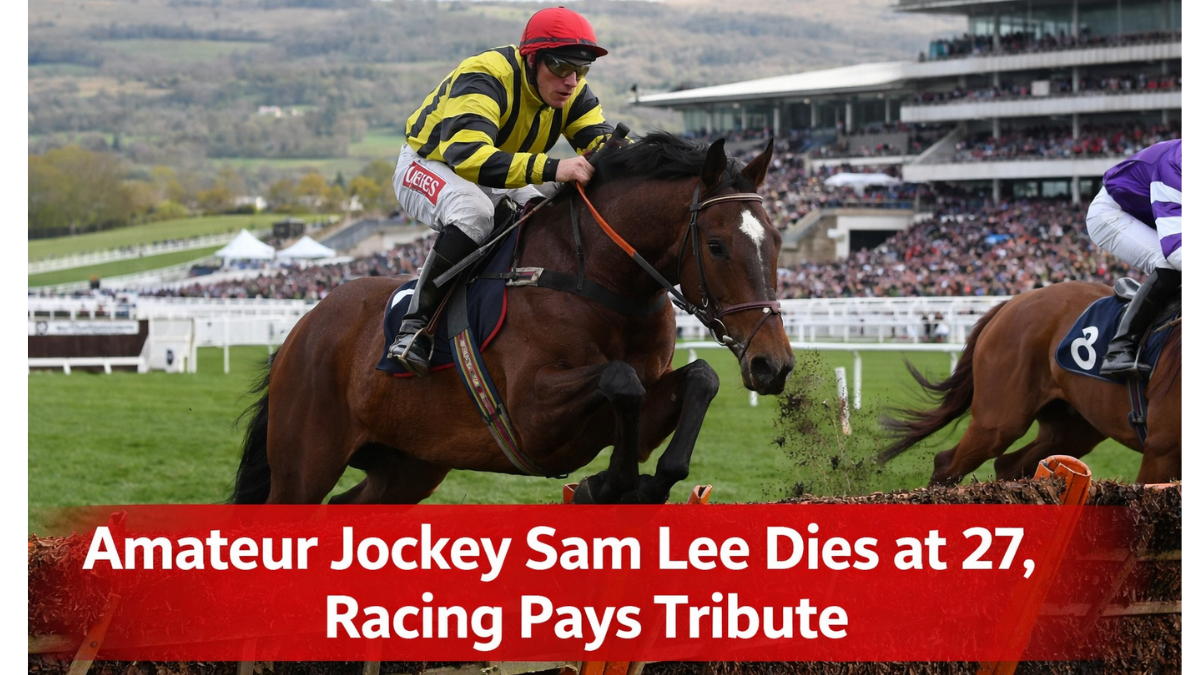
London, United Kingdom – March 7, 2026
The British racing community is mourning the sudden death of Sam Lee, an amateur rider widely known on the point-to-point circuit. News of the passing of the sam lee jockey spread quickly across racing circles on Friday, prompting tributes from trainers, officials, and fellow riders. Lee was 27 years old and had built a respected reputation within amateur jump racing. His death has left colleagues and supporters across the sport in shock.
Lee rode four winners under official racing rules during his career and also achieved numerous victories in point-to-point competitions. The amateur racing scene relies heavily on dedicated riders who often balance careers alongside their sport. Friends and trainers described Lee as a talented rider who remained deeply passionate about jump racing. His presence was widely known across British racing yards and rural racecourses.
Sam Lee jockey remembered across racing community
Tributes quickly emerged from trainers and racing organizations after confirmation of Lee’s death. Former employer Laura Morgan, a licensed trainer based in Leicestershire, recalled Lee as a cheerful and energetic figure. She said the news came as a devastating shock to those who knew him. Morgan remembered him as someone who brought enthusiasm and humor to the racing yard every day.
Morgan said Lee worked for her for about a year and gained valuable experience during that time. She explained that although he had a few rides under official rules, his true passion remained point-to-point racing. The trainer described him as friendly, hardworking, and dedicated to improving his riding skills. Colleagues at the yard also remembered his strong work ethic and commitment to the horses he cared for.
Beyond racing achievements, friends recalled Lee’s personal warmth and enthusiasm for the sport. Morgan said he was always impeccably dressed on race days and took pride in representing his profession. He also often brought his small terrier named George to the yard, where the dog became familiar to staff. Those details, colleagues said, captured his personality and close ties to the racing environment.
Racing authorities honour Sam Lee jockey
The Injured Jockeys Fund and the Point-To-Point Authority confirmed the rider’s death in a joint statement on Friday. Both organizations expressed deep sadness and offered condolences to Lee’s family and friends. Officials described him as a popular and respected member of the amateur racing community. They noted that the news had deeply affected riders, trainers, and racing supporters.
The statement said the point-to-point world was devastated by the loss of a young rider admired across the sport. Race meetings scheduled for the weekend announced plans to hold a minute’s silence before competition begins. Organizers said the tribute would allow participants and spectators to remember Lee’s contribution to the sport. Such gestures reflect the close-knit nature of the amateur racing community.
British racing authorities also responded with messages of support for those affected. Brant Dunshea, chief executive of the British Horseracing Authority, said the entire sport was shocked by the news. He noted that amateur riders remain an important part of horse racing’s heritage and community. Dunshea added that many across the sport were mourning the loss of a colleague and friend.
Career highlights remembered in British racing
Lee achieved one of his most significant victories at Cheltenham Racecourse, a venue considered one of jump racing’s most prestigious locations. In November 2019 he rode Golan Fortune to victory in a Listed handicap hurdle race. The horse was trained by Phil Middleton, and the win marked a major achievement in Lee’s riding career.
That Cheltenham victory stood out as a milestone for the rider. Competing successfully at such a venue requires both skill and deep knowledge of racing conditions. Friends said Lee considered the course a special place within the sport. According to those who knew him, he often spoke about Cheltenham with pride and enthusiasm.
Lee also remained active in the point-to-point circuit, which forms a vital pathway within jump racing. These events, typically staged in rural areas, allow amateur riders to compete while building experience. The circuit also supports the development of horses and riders before they progress to larger professional races. Lee’s participation in these events helped strengthen his reputation within the amateur racing community.
Support offered to those affected by loss
Following confirmation of the rider’s death, racing organizations highlighted the support services available to those close to him. Officials said counseling and assistance programs remain accessible through the sport’s welfare systems. These services aim to help riders, trainers, and staff deal with difficult moments within the racing community. Authorities encouraged anyone affected by the news to seek support.
Leaders within British racing emphasized that the sport relies on strong community connections. Riders often travel and work together across different racing yards and events. Because of those relationships, news of a colleague’s death can deeply affect participants across the industry. Officials said the community would continue supporting Lee’s friends and family during the coming weeks.
Tributes are expected to continue at race meetings across the country as the sport remembers Lee’s life and career. For many within British racing, his enthusiasm and dedication left a lasting impression. Colleagues described him as someone who truly loved the sport and the horses he rode.