Key Points
- The U.S.
- president announced a new 10% global tariff after the Supreme Court blocked earlier import taxes.The ruling limits executive trade authority and creates uncertainty for businesses worldwide.The move matters because it reshapes U.S.
- trade policy and triggers new legal and economic consequences.
- Washington, United States – February 21, 2026 Supreme Court ruling triggers immediate tariff response The Supreme Court struck down broad import taxes imposed under emergency authority last year.
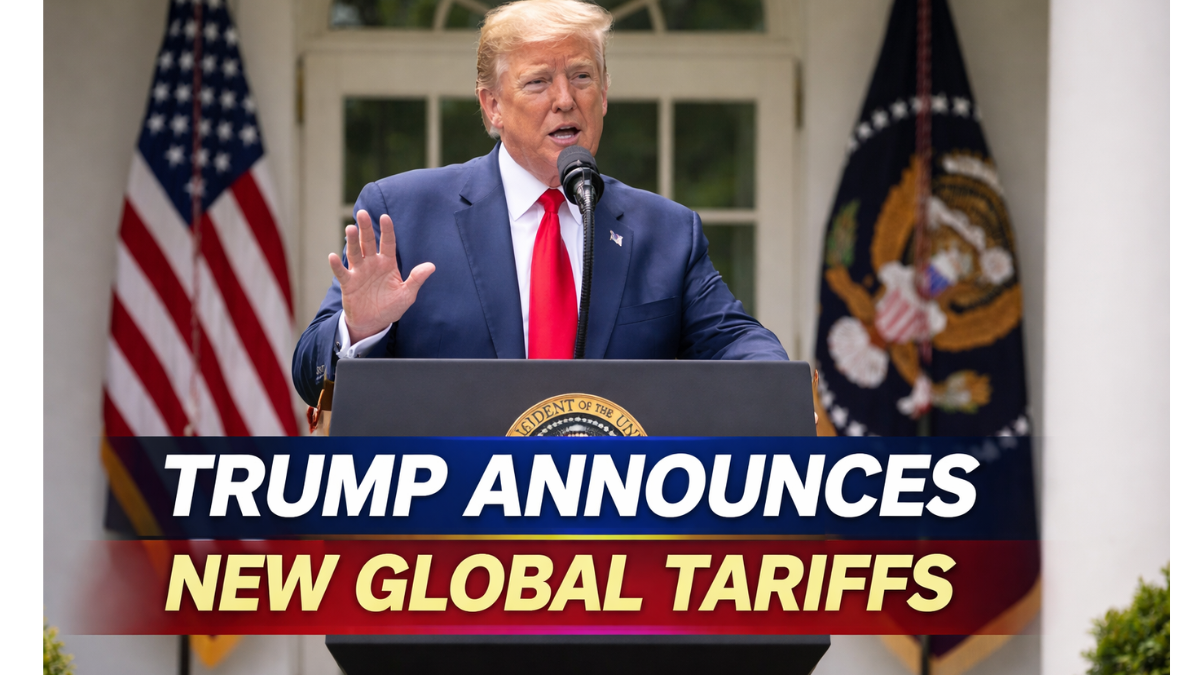
The U.S. president announced a new 10% global tariff after the Supreme Court blocked earlier import taxes.
The ruling limits executive trade authority and creates uncertainty for businesses worldwide.
The move matters because it reshapes U.S. trade policy and triggers new legal and economic consequences.
Washington, United States – February 21, 2026
Supreme Court ruling triggers immediate tariff response
The Supreme Court struck down broad import taxes imposed under emergency authority last year. The decision prompted an immediate response involving Trump tariffs announced hours later. The court ruled the president exceeded statutory limits when applying sweeping duties. The judgment reshaped the legal foundation of recent U.S. trade actions.
In a 6–3 vote, the justices ruled existing law did not authorize global tariff powers. The majority found Congress never granted open-ended authority to impose such taxes. The ruling delivered a major setback to executive-led trade enforcement. Businesses and states involved in the case welcomed the outcome.
Chief Justice John Roberts wrote that tariff authority requires explicit congressional approval. He stated Congress historically imposed strict boundaries on such delegations. The opinion emphasized constitutional separation of powers. That reasoning formed the basis for invalidating the measures.
How Trump tariffs were applied and challenged
Trump tariffs first targeted imports from Mexico, Canada, and China before expanding globally. The administration framed the action as a response to economic emergencies. The policy later expanded to dozens of trading partners worldwide. Businesses faced sudden cost increases across multiple sectors.
The White House relied on the International Emergency Economic Powers Act for authority. Critics argued the statute never mentioned tariffs or taxation powers. Several states and small firms filed legal challenges soon after implementation. Their lawsuits argued the policy bypassed Congress.
During oral arguments, challengers said Congress never intended such expansive authority. They warned the tariffs undermined established trade agreements. The court agreed the statute lacked clear authorization. That conclusion led to the invalidation of most duties.
Trump responds with new Trump tariffs authority
Speaking at the White House, Donald Trump criticized the ruling sharply. He described the decision as damaging to national interests. He accused some justices of undermining economic sovereignty.
Within hours, Trump announced a new 10% global tariff. The administration invoked Section 122 of U.S. trade law. That provision allows temporary tariffs up to 15% for 150 days. Congress must act before any extension.
The new Trump tariffs will take effect on February 24. The order outlines exemptions across multiple sectors. Certain minerals, fertilizers, pharmaceuticals, and electronics will avoid the levy. Some agricultural products and vehicles also received exemptions.
Legal limits reshape trade policy environment
The Supreme Court decision altered how future Trump tariffs may proceed. Section 122 places strict time limits on executive action. Lawmakers must approve longer-term measures. The ruling restores congressional oversight over broad trade taxation.
Trade lawyers noted the court left refund questions unresolved. The decision did not mandate repayment of collected duties. That responsibility likely falls to the Court of International Trade. Legal disputes may last several years.
Justice Brett Kavanaugh dissented, warning of administrative confusion. He said the ruling could create regulatory instability. He described the situation as legally complex. Other conservative justices joined the dissent.
Economic reaction and business response
Financial markets reacted positively following the ruling. The S&P 500 closed higher as investors welcomed clarity. Companies dependent on imports expressed cautious optimism. Many still face uncertainty under new Trump tariffs.
Small manufacturers reported relief from the decision. Import-heavy businesses anticipate lower short-term costs. Some firms, however, expect delays restoring supply chains. Legal uncertainty continues to affect planning.
Executives emphasized that refunds remain uncertain. Litigation costs may exceed recovered funds for smaller firms. Economists warned prolonged court battles could dilute relief. Market volatility remains a concern.
International response to Trump tariffs shift
Major trade partners responded cautiously to the developments. The European Commission acknowledged the ruling publicly. Officials said they are reviewing implications carefully. No immediate retaliatory measures were announced.
Canada and Mexico will retain exemptions under the USMCA trade pact. Most goods traded under that agreement remain unaffected. Other partners face the uniform 10% tariff. This includes countries with negotiated trade deals.
A White House official said previous concessions remain binding. The administration expects compliance despite tariff changes. Analysts described the approach as legally risky. Diplomatic friction may increase over time.
What comes next for Trump tariffs enforcement
The administration may explore alternative trade tools. Analysts expect possible use of Section 232 or Section 301. These laws address national security and unfair trade practices. Previous sector-specific tariffs remain intact.
More lawsuits are expected in coming weeks. Hundreds of companies have already filed claims. Retailers, manufacturers, and importers seek duty refunds. The courts will determine procedural outcomes.
Experts warn smaller firms face higher legal burdens. Litigation costs could limit participation in refund efforts. Policymakers may face pressure to create an administrative solution. Congressional action could determine long-term outcomes.
Closing summary of the evolving trade dispute
The Supreme Court ruling significantly reshaped U.S. trade authority. Trump tariffs now rely on narrower legal foundations. Businesses gained short-term clarity but face new uncertainty. Markets responded positively yet cautiously.
The new 10% tariff marks a temporary solution. Congressional involvement will decide future direction. Legal challenges will continue shaping outcomes. The situation remains fluid for global trade.
Topic Cover – TrumpTariffs, USTrade, SupremeCourt, Trade Policy, Trump News