Seoul, South Korea – March 14, 2026
North Korea launches missiles amid regional military drills
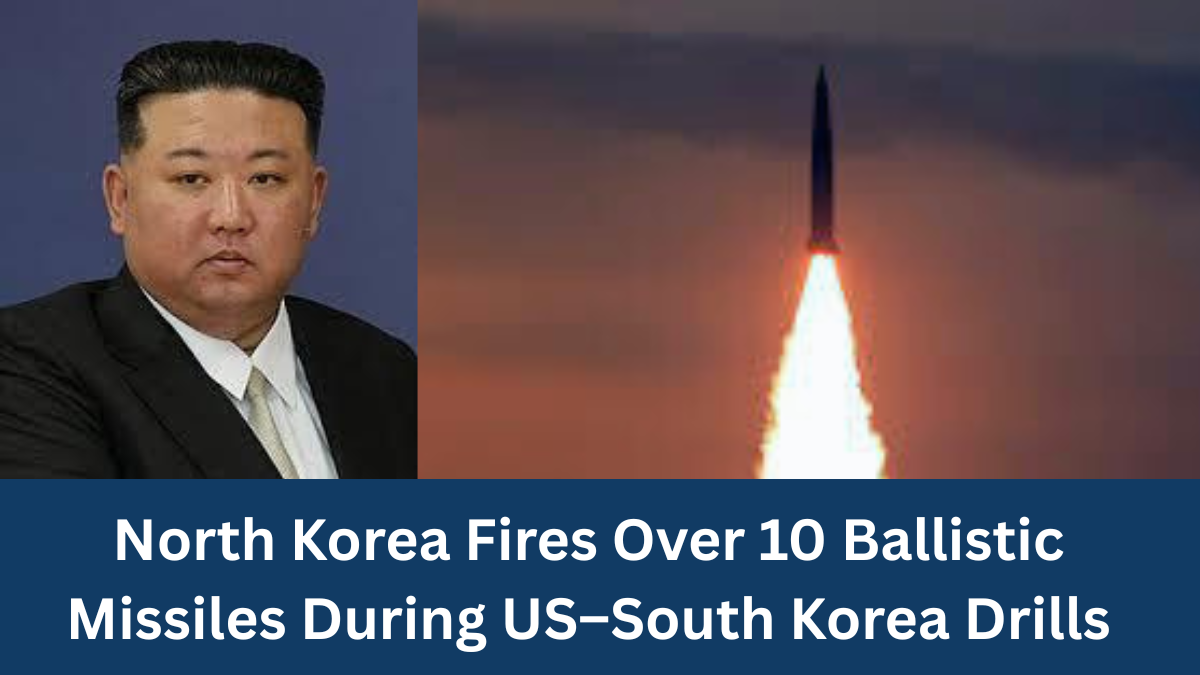
North Korea fired more than ten ballistic missiles toward waters off its east coast on Saturday, according to South Korea’s military. The launches occurred as large-scale joint exercises between the United States and South Korea continued across the peninsula. Officials said the tests added fresh tension to an already fragile security environment in Northeast Asia. The latest north korea actions quickly drew attention from Seoul, Washington, and Tokyo.
South Korean defense authorities said they detected the missile launches around early afternoon local time. Radar systems tracked the projectiles shortly after they lifted from areas near Pyongyang. The missiles traveled eastward before landing in waters outside nearby territorial zones. Military officials said they continue to analyze the launch data and missile characteristics.
Details emerge in latest North Korea news
South Korea’s Joint Chiefs of Staff said several missiles were launched from the Sunan area near Pyongyang. The launches occurred at approximately 1:20 p.m. local time and headed toward the East Sea. Defense officials described the weapons as unidentified ballistic missiles pending further analysis. The statement confirmed that allied surveillance systems monitored the launches throughout their flight paths.
Japan also confirmed the detection of an object believed to be a ballistic missile. The country’s coast guard issued navigation warnings to ships operating in nearby waters. Japanese broadcaster NHK reported that the projectile appeared to fall outside Japan’s exclusive economic zone. Authorities in Tokyo said no damage or injuries had been reported following the launch.
Also Read – Netanyahu Says Israel Will Intensify Iran War Operations
Long history of North Korea missile testing
North Korea has conducted missile testing for decades as part of its broader weapons development program. Analysts say the country seeks to refine delivery systems capable of carrying nuclear warheads. The government in Pyongyang insists its weapons programs are necessary for national defense. However, neighboring states and Western governments view the tests as destabilizing actions.
The United Nations Security Council has imposed multiple sanctions on the country since 2006. These measures target financial networks, weapons development, and trade activities linked to military programs. Despite economic restrictions, missile testing has continued at regular intervals. Experts say the tests provide data that helps engineers refine propulsion systems and targeting technologies.
Joint military drills draw strong reaction
The launches occurred during annual military exercises conducted by the United States and South Korea. Officials from both countries say the drills aim to strengthen defensive readiness against potential threats. The exercises involve thousands of troops and advanced military equipment. Tanks, armored vehicles, and engineering units have participated in large-scale river crossing drills.
American forces maintain a significant presence on the Korean Peninsula. Roughly 28,500 U.S. troops remain stationed in South Korea under long-standing defense agreements. These troops train regularly with South Korean forces to maintain operational readiness. Military commanders say the drills help both sides respond quickly during regional crises.
North Korea strongly opposes such exercises and frequently criticizes them in official statements. Authorities in Pyongyang describe the drills as rehearsals for potential military action against their country. State media often warns that such training could provoke strong responses. The latest launches followed warnings issued earlier this week by North Korean officials.
Regional monitoring intensifies in Japan
Japan closely monitored the missile launches through its national defense systems. Radar networks and satellite systems detected potential projectiles shortly after launch. Authorities issued safety alerts to vessels operating in the Sea of Japan. Officials said no missiles entered Japanese territory or caused immediate danger to coastal communities.
Japan’s defense ministry continues to strengthen monitoring capabilities as regional missile activity increases. The country has expanded missile defense systems in recent years. These measures include interceptor installations and enhanced radar coverage. Security experts say such systems play an important role in regional defense coordination.
Diplomatic developments accompany rising tensions
The missile launches occurred during a period of renewed diplomatic discussion involving the United States and regional partners. Earlier this week, South Korean Prime Minister Kim Min-seok met with U.S. President Donald Trump in Washington. Officials said the meeting included talks about possible engagement with Pyongyang. Both leaders discussed ways to reopen communication channels with North Korea.
Trump has previously expressed interest in direct talks with North Korean leader Kim Jong Un. Diplomatic meetings between the two countries occurred during earlier administrations but stalled without lasting agreements. Analysts say renewed dialogue could help reduce tensions on the Korean Peninsula. However, missile tests often complicate diplomatic efforts.
South Korean officials say they remain committed to maintaining security while exploring diplomatic options. Government representatives continue to emphasize the importance of dialogue. At the same time, defense authorities stress the need for strong military preparedness. Balancing these goals remains a central challenge for policymakers.
Security implications for the region
The latest missile activity highlights ongoing tensions across Northeast Asia. Security experts say frequent missile launches create uncertainty in regional defense planning. Neighboring countries monitor the tests closely to assess technological progress. Each launch provides new information about propulsion systems, accuracy, and operational capabilities.
Military analysts also note that missile tests often serve political and strategic messaging purposes. Governments may use such demonstrations to show strength during periods of diplomatic friction. Regional powers respond by reinforcing alliances and defensive cooperation. This cycle of testing and response continues to shape security dynamics.
The broader geopolitical environment adds further complexity. The United States maintains security commitments to both South Korea and Japan. These alliances influence regional military planning and crisis response strategies. As tensions rise, governments across the region monitor developments carefully.
What comes next after the launches
Authorities in Seoul say they will continue tracking missile activity and analyzing data from the launches. Intelligence teams are reviewing radar information and satellite imagery. The findings could reveal details about missile type, trajectory, and technological improvements. Such assessments often take days to complete.
Regional governments have not announced immediate retaliatory measures following the tests. However, officials say military readiness remains high across the peninsula. Defense planners continue to evaluate potential responses should tensions escalate further. Diplomatic channels also remain active as governments seek ways to manage the situation.
The latest events underscore the fragile balance between military deterrence and diplomacy in Northeast Asia. Missile tests and joint exercises continue to shape security discussions among regional powers. Observers say future developments will depend on both political decisions and strategic calculations. For now, governments across the region remain focused on monitoring events and preventing further escalation.