Moscow, Russia – June 18, 2026
The Ukraine Drone Attack Moscow campaign marked one of Kyiv’s largest aerial assaults on the Russian capital since the war began. Ukrainian drones reportedly struck a major oil refinery near Moscow and disrupted air traffic across the region. The attack occurred overnight and triggered fires, explosions, and widespread security responses. The incident highlights the expanding reach of the conflict beyond traditional front-line battle zones.
The latest strike comes at a critical moment in the Russia-Ukraine war. Ukraine continues to seek stronger Western backing while increasing pressure on Russian infrastructure. Recent diplomatic discussions at the G7 Summit focused heavily on Moscow’s willingness to engage in peace talks. Against that backdrop, attacks on strategic Russian assets have gained greater military and political significance.
Ukraine Drone Attack Moscow Hits Key Energy Facility
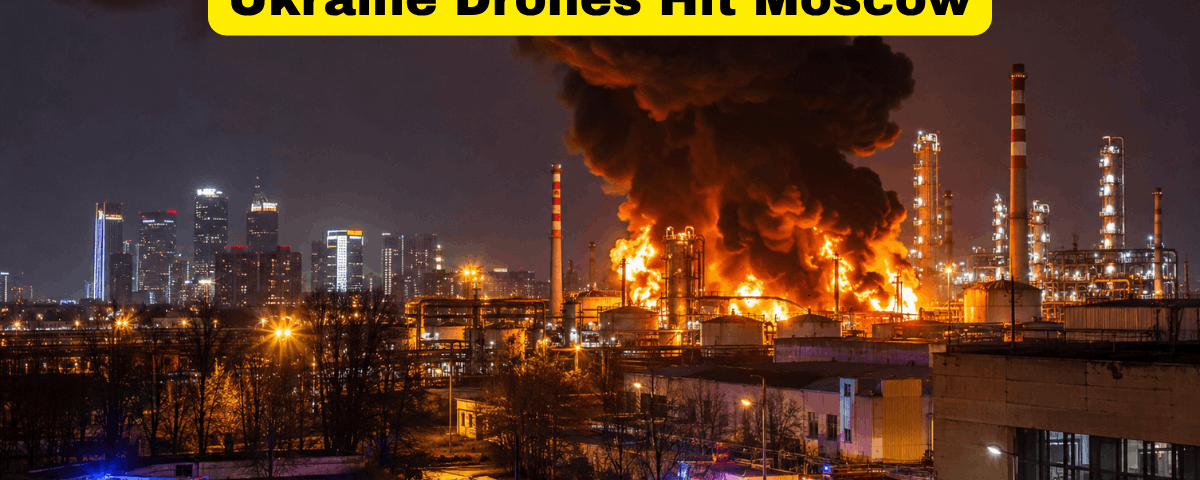
Witness footage showed towering flames and thick black smoke rising above the Moscow skyline. Videos captured a powerful explosion at an oil refinery located in the southeastern district of Kapotnya. Emergency crews responded quickly as the fire spread through parts of the industrial complex.
The refinery is considered one of Russia’s most important fuel-processing facilities. According to official information, it supplies more than one-third of the fuel consumed in the Moscow region. Any disruption to operations could affect fuel distribution across the capital and surrounding areas. The facility therefore remains a strategic target in Ukraine’s long-range drone campaign.
Russian authorities reported significant damage but did not immediately provide a full assessment of operational losses. Aviation authorities also introduced temporary restrictions at several airports. These measures caused flight delays and disruptions throughout the Moscow area. Officials cited security concerns linked to ongoing aerial threats.
Russia’s Defence Ministry claimed air defense systems intercepted hundreds of drones overnight. Officials stated that many drones were destroyed before reaching critical targets. Despite these efforts, several drones reportedly penetrated defensive layers and reached strategic infrastructure. The scale of the operation underscored growing challenges for Russian air defenses.
Moscow Air Defenses Face Growing Pressure
Russian officials said air defense units intercepted 555 Ukrainian drones across multiple regions. Nearly 200 drones were reportedly destroyed while approaching Moscow. If confirmed, the numbers would represent one of the largest drone engagements of the conflict.
The growing use of drones has transformed the nature of modern warfare. Both Russia and Ukraine increasingly rely on unmanned systems for surveillance, reconnaissance, and attacks. Long-range drone strikes now allow both sides to target infrastructure hundreds of kilometers from active battlefields. This evolution has reshaped military planning throughout the war.
Ukraine has repeatedly targeted energy facilities inside Russia over the past year. Oil depots, refineries, and fuel storage sites have become frequent objectives. Kyiv argues that such facilities support Russian military operations and logistics. Moscow, meanwhile, views these attacks as attempts to undermine domestic stability.
The latest Ukraine Drone Attack Moscow operation demonstrates the increasing sophistication of Ukrainian drone capabilities. Experts note that larger drone swarms can overwhelm air defense systems. Even limited successes can create significant economic and psychological effects. These factors make drone warfare an increasingly important component of the conflict.
Ukraine Drone Attack Moscow Reflects Broader Strategy
Military analysts believe Ukraine’s strikes serve multiple strategic purposes. Beyond physical damage, attacks aim to increase pressure on Russian leadership. They also demonstrate Ukraine’s ability to reach high-value targets deep inside Russian territory.
The refinery attack occurred for the second time within a week. Repeated targeting suggests an effort to degrade operational capacity over time. Strategic infrastructure often requires extensive repairs following multiple strikes. This can create longer-term disruptions than a single attack.
Ukraine has increasingly combined military actions with diplomatic efforts. President Volodymyr Zelenskyy continues to seek expanded support from Western allies. At the same time, Ukrainian forces maintain pressure through long-range operations. The dual-track approach seeks to strengthen Ukraine’s position in any future negotiations.
The Ukraine Drone Attack Moscow incident also sends a message to international partners. It demonstrates Ukraine’s determination to sustain pressure despite battlefield challenges. Continued operational reach may strengthen Kyiv’s argument for additional military assistance. Western governments continue to debate the scale and duration of future support.
G7 Leaders Increase Pressure on Russia
The refinery strike coincided with renewed diplomatic momentum at the G7 Summit. Leaders expressed growing unity regarding measures to pressure Russia. Discussions focused on sanctions, military assistance, and pathways toward ending the conflict.
French President Emmanuel Macron described a significant shift in international attitudes. He stated that several leaders now believe Russia has shown limited willingness to engage seriously in peace discussions. Such assessments influenced conversations throughout the summit.
Attention also centered on the position of U.S. President Donald Trump. Several leaders welcomed what they viewed as a firmer approach toward Moscow. While policy details continue to evolve, the change attracted considerable international attention. Ukraine hopes stronger Western coordination will improve its strategic position.
Diplomatic backing remains crucial as the conflict enters another difficult phase. Military operations alone have not produced a decisive breakthrough for either side. As a result, political pressure and economic measures continue alongside battlefield developments. The latest drone attack unfolded within this broader diplomatic environment.
Economic and Geopolitical Impact of the Refinery Strike
Energy infrastructure remains central to Russia’s economy and military logistics. Oil refineries process fuel required for transportation, industry, and defense operations. Disruptions can create logistical complications and increase operational costs.
Although Russia maintains extensive refining capacity, repeated attacks may gradually affect efficiency. Repair costs can accumulate as facilities face recurring damage. Security measures also require significant financial resources. These factors contribute to broader economic pressures linked to the war.
Global energy markets closely monitor developments involving Russian oil infrastructure. Major disruptions could influence supply expectations and market sentiment. Investors often react quickly to signs of instability affecting energy production. While immediate global impacts remain limited, risks continue to attract attention.
The Ukraine Drone Attack Moscow operation highlights the growing connection between military actions and economic consequences. Modern conflicts increasingly target strategic sectors beyond conventional military installations. Energy facilities, transportation networks, and communication systems have become key objectives. This trend is evident throughout the Russia-Ukraine war.
What Comes Next in the Russia-Ukraine Conflict
Both Russia and Ukraine appear committed to expanding aerial operations. Drone technology offers relatively low-cost options for reaching distant targets. As capabilities improve, attacks may become more frequent and sophisticated.
Military experts expect continued competition between drone developers and air defense systems. Each side seeks technological advantages that can shift battlefield dynamics. New tactics and countermeasures are emerging rapidly. This ongoing adaptation will likely shape future phases of the conflict.
Diplomatic efforts also remain active despite persistent fighting. International leaders continue searching for conditions that could support negotiations. However, recent events suggest major disagreements remain unresolved. The path toward a lasting settlement remains uncertain.
The Ukraine Drone Attack Moscow incident reflects the broader trajectory of the war. Strategic infrastructure, long-range strikes, and international diplomacy now play central roles. As both sides intensify efforts, the conflict continues to carry significant regional and global implications. Future developments will likely influence security, energy markets, and geopolitical relations far beyond Eastern Europe.
Frequently Asked Questions
Q: Why was the Moscow oil refinery targeted?
A: The refinery is a major fuel supplier for Moscow and supports critical energy infrastructure. Ukraine considers such facilities strategically important to Russia’s war effort.
Q: How significant was the Ukraine Drone Attack Moscow operation?
A: Russian officials described it as one of the largest drone assaults near Moscow. Hundreds of drones were reportedly involved across multiple regions.
Q: What impact could the refinery strike have?
A: The attack may disrupt fuel operations, increase repair costs, and strengthen pressure on Russian infrastructure. It also highlights the growing role of long-range drone warfare.
Topic Coverage
Ukraine intensifies pressure on Russia with one of the largest drone operations targeting Moscow’s strategic energy infrastructure.
The refinery strike coincides with stronger international backing for Kyiv and renewed diplomatic pressure on Moscow.
Source: Official government statements and international media reports
Learn More About
https://www.reuters.com/